Boosting Search ROI for AI Software
For the greatest data limits and advanced API access. Material Intelligence: Clearscope or MarketMuse. To manage content decay and topical authority throughout thousands of pages. Shrieking Frog + Sitebulb. Desktop tools that can crawl enormous websites that cloud tools may miss out on. ChatGPT Group + Claude Pro. For much better data security and more human-sounding long-form content.
Your very first step ought to be linking every tool to Google Browse Console and Google Analytics 4. This guarantees your AI tools are making suggestions based on your real traffic, not just estimates.
If you discover yourself utilizing ChatGPT to compose meta tags instead of the built-in tool in Semrush, cancel the extra feature and save the cash. Comprehending the real expense of these tools requires looking past the "beginning at" price. A lot of platforms charge extra for AI functions or restrict the number of times you can utilize them each month.
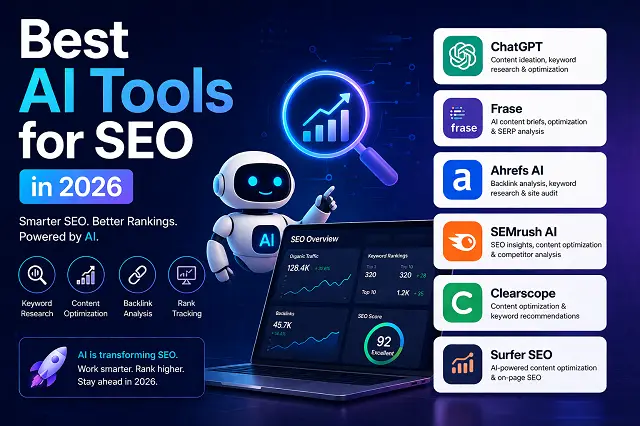
Remember that "All-in-One" tools change a number of smaller memberships, which can often be less expensive in the long run. Tool Entry Price Mid-Tier Enterprise Free Trial Semrush $129/mo $249/mo $499/mo 7 days Ahrefs $99/mo $199/mo $399/mo $7 trial Internet user SEO $89/mo $129/mo $219/mo None Clearscope $170/mo Custom-made Customized Demonstration ChatGPT Plus $20/mo $20/mo $25/user Free tier Frase $15/mo $45/mo $115/mo 5-day trial MarketMuse Free tier $149/mo $399/mo Free tier SE Ranking $52/mo $95/mo $207/mo 14 days Jasper $49/mo $69/mo Customized 7 days Conductor Customized Customized Customized Demonstration The "finest" stack depends on spending plan.
When budgeting, presume your costs will increase as your traffic grows. Many SEO tools scale their prices based on the number of keywords you track or the number of pages you investigate. For a growing medium-sized company, expect to invest in between $300 and $500 per month for a complete, professional-grade AI SEO setup.
Some Benefits of Mass Link Posting Software
These tools are not magic. They are innovative calculators that require a human at the wheel to prevent "autopilot" errors. To use them efficiently, you must comprehend both their power and their pitfalls. The most immediate benefit is Performance. Tasks like keyword clustering or creating 500 meta tags now take minutes rather of a week.
Beyond speed, AI assists you make Data-Driven Choices. Tools like Ahrefs and Semrush now utilize device learning to find patterns in rival behavior that a human eye would miss out on, such as a subtle shift in their internal linking method. By standardizing these checks, you ensure Consistency throughout every page you release, making it easier to keep high quality as you grow.
Simply because a tool gives you a "Content Rating" of 100 doesn't imply your page will rank; it simply suggests you utilized the best keywords. If you follow AI suggestions too strictly, you run the risk of Over-Optimization, which can make your writing feel robotic and really injure your rankings if it sets off Google's spam filters.
Improving Web Structure for Seamless Indexing
Between regular monthly memberships and "AI credits" for writing your budget plan can disappear rapidly if you aren't careful. AI tools amplify your existing abilities. If you do not comprehend the fundamentals, they just help you make errors much faster.
Can execute bad data at scale if not examined. Offers a clear roadmap for on-page SEO. Motivates "composing for robots" over humans. Identifies hidden competitor gaps. Often depends on historical information, not real-time. Produces very first drafts in seconds. Frequently contains errors or generic "fluff." Finds broken code and links quickly.
With lots of choices, the "best" tool is merely the one that fits your existing organization requirements. Selecting an enterprise-level tool for a solo blog is simply as wasteful as using a budget tool for a 10,000-page corporate website. Will the tool link to your existing WordPress site or Google Search Console?
Optimizing Web Architecture for Faster Indexing
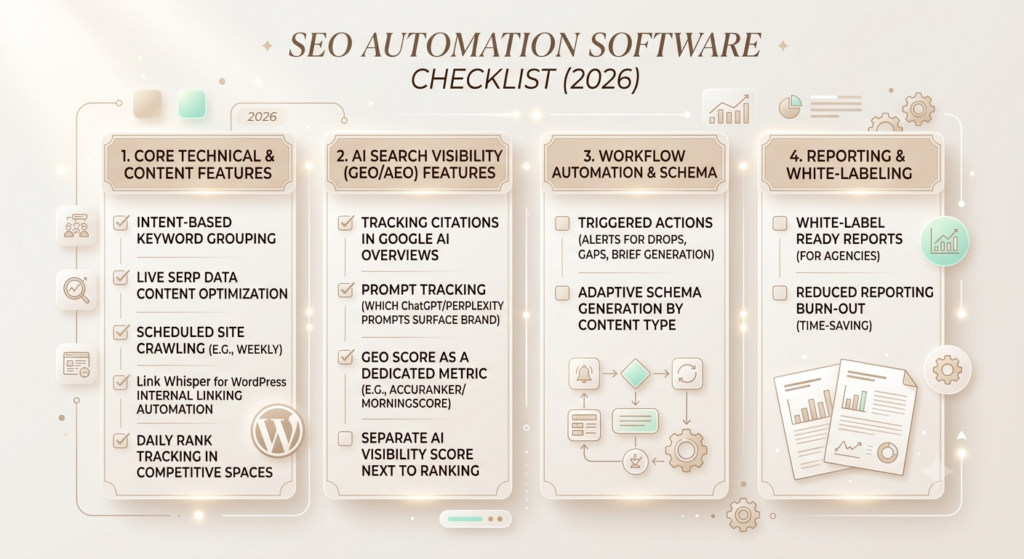
Will become the requirement; tools won't just inform you what occurred, they will forecast which keywords are about to trend. Second, (tracking ChatGPT/SGE discusses) will change "Rank Tracking" as the most crucial metric. Will continue, will continue; you will see fewer specific niche appsThe finest AI SEO tool is the one you actually use well.
high learning curve) Take a look at your highest-rated priorities above and match them to the following industry requirements: Internet user SEO or Clearscope Semrush or Ahrefs Ahrefs Shrieking Frog + Sitebulb SE Ranking + NeuronWriter ChatGPT + Jasper AI SEO tools are software platforms that utilize maker knowing (ML) and natural language processing (NLP) to automate and improve search engine optimization.
They can draft material, group thousands of keywords by intent, determine technical code errors, and even anticipate how much traffic a brand-new page might create before you compose it. Yes, but they are assistants, not replacements. They work by processing data at a scale humans can not match. For instance, an AI tool can evaluate the leading 50 outcomes for a keyword in seconds to discover typical patterns.
Using AI to spam low-quality material will result in charges, but using it to improve research and structure is highly effective. For many professionals, the answer is yes since of the time conserved. If a $100/month tool saves you 10 hours of manual keyword research, it has actually spent for itself.
Xrumer link blast serviceThe investment becomes "worth it" when you need to manage numerous pages or deep competitive information that complimentary tools do not offer. There is no single "best" tool, but Semrush is the most complete all-in-one platform for 2026. If you specifically need content optimization, Web surfer SEO is the market favorite. For those on a rigorous budget plan who still desire professional functions, SE Ranking provides the very best balance of cost and power.
AI-Powered SEO Rank Software for 2026 Growth
Surfer SEO deserves the investment if you publish content routinely (more than 2-3 articles a month). Its capability to provide a "real-time" SEO score based on live competitor information considerably increases the possibilities of ranking on page one. Nevertheless, if you only compose occasional personal updates or don't care about organic traffic, the month-to-month subscription expense might be too high for your requirements.
Ahrefs is usually considered much better for backlink information precision and deep keyword research study. In 2026, Semrush is the much better option for groups wanting AI composing assistants and "Co-pilot" functions, while Ahrefs is the choice for information purists who desire the most trusted link index. Yes. ChatGPT is excellent for "processing" SEO tasks such as clustering keywords, composing schema markup, and generating content outlines.