Handling JavaScript Execution for Large-Scale SEO Site Networks
Neural Network Logic in Modern link acquisition
The year 2026 has seen a fundamental shift in how digital authority is established. Manual outreach, once the backbone of any project, has mainly been replaced by high-velocity systems driven by deep learning architectures. These neural networks do more than simply automate emails. They process vast amounts of unstructured information to determine patterns in website health and topical importance that the human eye can not view. In the existing environment, the speed of link acquisition has increased by an order of magnitude, yet the danger of algorithmic detection has actually paradoxically decreased due to the elegance of these AI-driven tools.
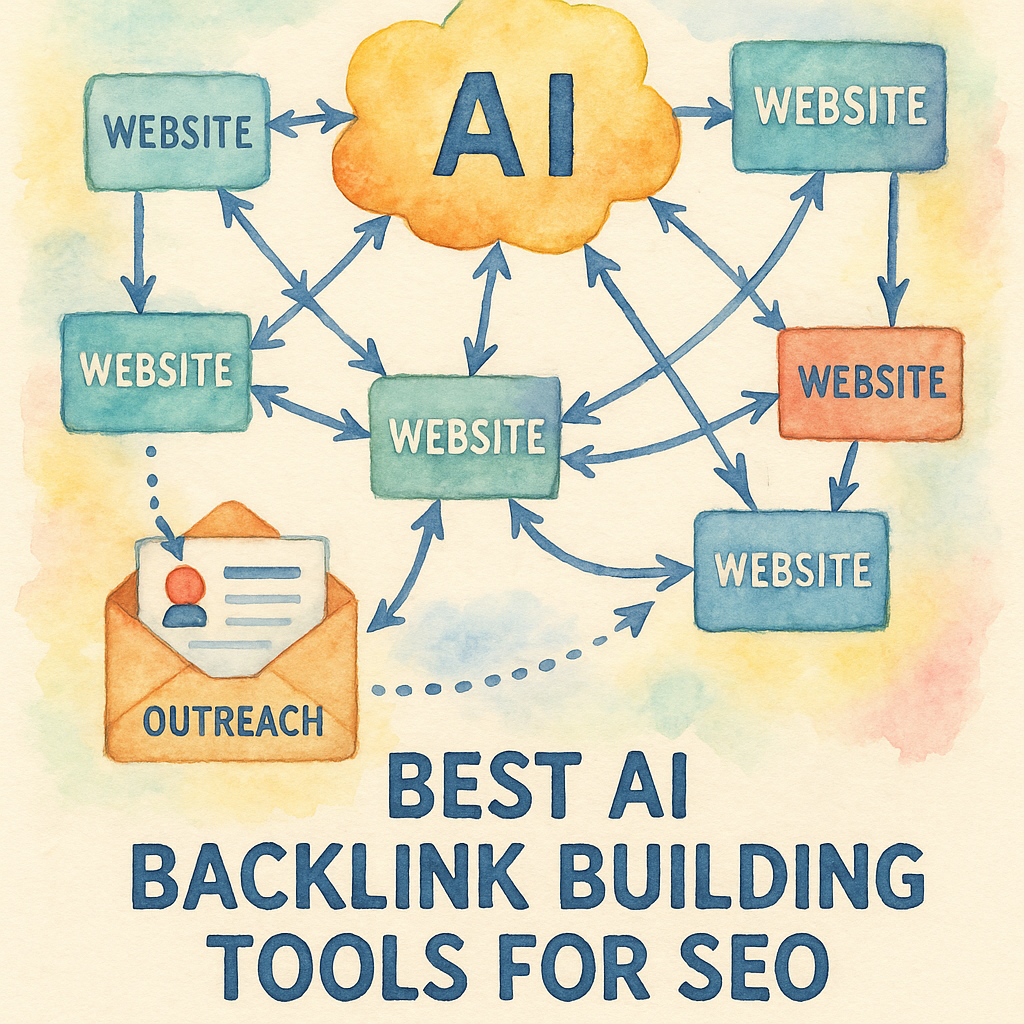
The core of this change lies in the combination of Graph Neural Networks (GNNs) These designs treat the entire internet as a series of interconnected nodes, enabling a digital marketing professional to picture how a single link affects the broader web of a website's authority. By 2026, these tools can predict the "link juice" decay over a three-year period, representing prospective website closures, content shifts, and online search engine updates. This predictive ability guarantees that every acquisition adds to a stable long-lasting profile rather than a temporary spike in exposure.
Scaling Link Velocity in local markets
Development in regional business sectors now requires a level of precision that makes conventional spreadsheets obsolete. High-velocity link structure in 2026 is specified by the capability to protect hundreds of placements monthly while maintaining a natural growth curve. Neural networks manage this by injecting intentional "noise" and variability into the acquisition process. They examine the growth patterns of top-level sites in a particular niche and after that mirror those patterns with minor variations to prevent activating spam filters. This method allows organizations to scale rapidly without the traditional worry of a manual review or an unexpected drop in rankings.
Effective execution frequently depends on finding the best balance between volume and specificity. Lots of organizations concentrating on Asia Virtual Solutions Software discover that neural networks can determine hyper-local chances that were formerly hidden. An AI might find a community newsletter in a specific neighborhood that has high topical importance but low standard metrics. These "surprise gems" provide a level of authenticity that search engines in 2026 worth extremely. By securing these niche placements together with high-authority links, the overall profile looks more organic and resilient.
Semantic Alignment by means of Transformer Designs
Using Large Language Designs (LLMs) and transformer architectures has altered the principle of "relevance" in 2026. Online search engine no longer just look for matching keywords in between 2 pages. They try to find semantic positioning-- a shared conceptual area between the source and the target. Link structure tools now utilize neural networks to perform real-time material analysis of possible link partners. If an article discusses the technical elements of industrial solutions, the AI guarantees the outbound link is placed within a paragraph that shares a similar vector area. This positioning increases the worth of the link and improves the user experience by providing more appropriate paths through the web.
These systems also deal with the content production aspect of link structure. In 2026, the visitor posts and short articles used for outreach are produced by fine-tuned designs that match the tone, design, and intricacy of the target website. This is not the generic AI content of years past. These are advanced pieces that utilize data-driven insights to supply worth to the reader. Due to the fact that the content is so well-integrated into the host site, the links within them are treated with much greater regard by indexing spiders. This deep combination is an essential consider the success of contemporary digital growth campaigns.

Outreach Automation and Support Learning
The settlement stage of link structure has actually likewise been transformed. Support Learning (RL) agents now handle the interaction in between link home builders and website owners. These agents gain from every interaction. If an editor in the local region responds much better to a particular subject line or a certain type of value proposition, the system adapts. Over time, the success rate of outreach campaigns improves as the neural network discovers the choices and habits of countless different webmasters. This level of personalization at scale was impossible before the current wave of AI combination.
High-velocity operations utilize these RL representatives to deal with the initial vetting and very first three rounds of interaction. This maximizes human experts to focus on high-level technique and the most valuable partnerships. The effectiveness gains are enormous. A team that utilized to secure 10 links a month in 2026 can now secure a hundred with the exact same amount of human effort. The concentrate on Asia Virtual Solutions Software remains a priority, however the mechanics of reaching that goal have actually ended up being totally data-driven and automated.
Predictive Analytics for Link ROI in competitive areas
Financial investment in search presence is no longer a guessing video game. Neural networks can now supply a "Future Value Rating" for any potential backlink. This rating is calculated by looking at the historical efficiency of similar links and the forecasted development of the target domain. In competitive regions like high-growth markets, understanding which links will provide the very best return on financial investment is essential. Tools now enable users to simulate various link structure circumstances. You can ask the system, "What takes place to my ranking if I acquire twenty mid-tier links versus five high-tier links this month?" and get a high-probability forecast based upon current trends.
This predictive power likewise assists in defensive SEO. By 2026, neural networks can keep an eye on the link structure activities of competitors in real-time. If a rival brand starts a high-velocity campaign in a particular niche, the system can inform you and suggest a counter-strategy. This might include targeting the exact same high-value websites or pivoting to a different set of keywords where the competitors is weaker. This constant monitoring and adaptation ensure that a website maintains its authority even in a fast-moving market.
The Human Role in a Neural-First Environment
Despite the high level of automation, human oversight is still necessary in 2026. The function has changed from "doer" to "architect." Experts now spend their time tweak the neural models and setting the strategic direction for the AI. They define the parameters of the "link neighborhood" they desire to inhabit and set the borders for the outreach agents. This guarantees that while the system is moving at high speed, it is always relocating an instructions that lines up with the brand's long-term goals. The human touch is especially important when dealing with high-authority publications where personal relationships still carry weight.
The ethical usage of AI in link building is another location where human judgment is needed. As tools become more powerful, the temptation to utilize them for manipulative purposes increases. However, online search engine in 2026 have likewise become much better at identifying synthetic patterns. A human strategist understands when to draw back and when to press for more development. They guarantee that the digital authority being built is authentic and that the site provides real value to individuals who discover it through search. This balance in between AI speed and human ethics is what specifies the most effective firms today.
Looking forward, the combination of neural networks into link structure tools is only going to deepen. We are currently seeing the very first tests of multi-modal designs that can analyze images and videos for link chances. In an era where a single video can drive more traffic than a dozen post, having the ability to protect links within visual content will be the next big frontier. In the meantime, the focus remains on improving the semantic and predictive capabilities of existing systems. The outcomes promote themselves. The companies that have actually welcomed these high-velocity, AI-driven methods in 2026 are the ones dominating the search engine result in every significant sector.